WELL AP Exam Prep Course
BECOME A WELL AP IN 2 WEEKS, NOT MONTHS
WELL AP exam prep for the v2 exam, trusted by 7,000+ professionals.


WHY THIS WELL AP TRAINING IS WORTH IT
SIMPLIFIED COURSE
Just 30 minutes a day for 1 week to learn all material.
TRUSTED BY 7,000+ PROFESSIONALS
Students worldwide have passed using our training and shared their experience on LinkedIn, Trustpilot and more!
AN OFFICIAL IWBI MEMBER
Archiroots holds the IWBI Cornerstone Membership at the International WELL Building Institute, the organization behind the WELL certification.
COMPLETE TRAINING PACKAGE
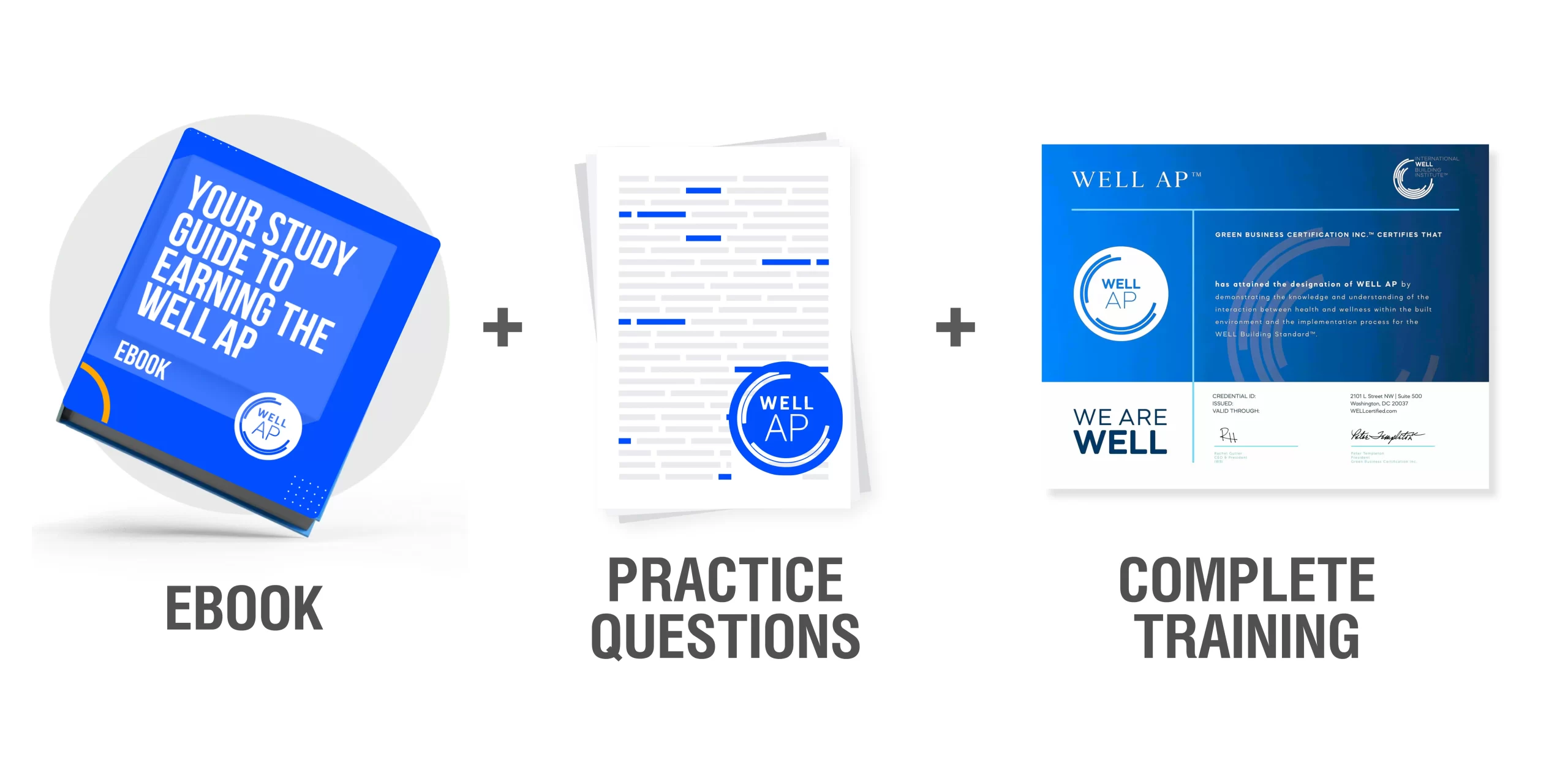
This simplified WELL AP course, along with our practice exams and flashcards are everything you need to pass.
INSTRUCTOR SUPPORT
Schedule calls directly with a working WELL AP consultant.
ARCHIROOTS IS AN OFFICIAL IWBI MEMBER
Holds IWBI Cornerstone Membership


Free WELL AP Exam Guide PDF
The free Archiroots WELL AP exam guide is built to get you moving in the first hour. It answers the questions candidates ask before they commit like the exam format, what it costs, how registration works.
It also connects you to the free resources you’ll use immediately like free WELL AP practice questions. It’s the most useful free WELL AP resource we’ve published.
SHADI
ABOUSAMRA
LEED AP AND WELL AP INSTRUCTOR, WELL FACULTY, SUSTAINABILITY CONSULTANT AND UNIVERSITY PROFESSOR. TO DATE SHADI HAS HELPED MORE THAN 7,000 PROFESSIONALS EARN THEIR LEED AND WELL CREDENTIALS.
There is no one better to take the WELL AP exam prep from. Featured by IWBI: read Shadi’s story.
He has streamlined green building projects, making him an expert, a WELL AP consultant. He has provided WELL AP and LEED AP exam prep to architects, engineers and more. At some of the most prestigious academic institutions and the biggest companies like the Dubai Municipality, Bureau Veritas, Amideast and AUB to name a few.
















WELL AP EXAM PREPARATION IN 2 WEEKS
WEEK 1
Learn all material using this simplified training, just 30 min/day.
WEEK 2
Exercise on 1 practice exam a day and review the flashcards.
REGISTER & SCHEDULE
Register on IWBI and schedule on the Prometric website.
YOUR 2 WEEK WELL AP PLAN
If you want to become a WELL AP in a fast, proven manner, then you are in the right place. Start by gathering free resources like the WELL AP Candidate Handbook and our free WELL AP exam guide. The WELL AP study guide explains the plan in detail.
From there, follow the below 4 steps:
1. Learn the WELL AP training material
Using this simplified, on-demand training course that breaks down the WELL building Standard into bite-sized lessons. Skip the 800 page books and complicated reference guides, you can learn all the WELL AP material in just 1 week by dedicating only 30 minutes a day.
2. Exercise on practice exams
Take 1 practice exam a day, making sure to pass them before registering for the official exam. You can get started with this free WELL AP practice exam.
3. Review through flashcards
The fastest way to lock in the key features and thresholds across all 11 concepts is through WELL AP flashcards, proven the most efficient way to study on the go. Try the free WELL AP flashcards first.
4. Register and schedule
Registration and scheduling happen on two different sites. First register and pay for the exam on IWBI, where you’ll receive an eligibility ID (EID). Then use that EID to schedule on Prometric, at a test center or online via ProProctor.
Already hold a LEED credential, or planning to? Most professionals pair WELL AP with the LEED Green Associate and LEED AP BD+C to cover both sustainability and human health.
See what people are posting on Linkedin
WELL AP students who passed

MSA MArch 1 · HKU BA(AS) · BREEAM AP · EDGE Expert
I’m happy to share that I’ve obtained a new certification: WELL Accredited Professional from the International WELL Building Institute (IWBI)!

Interior Designer at Ashley McGraw Architects
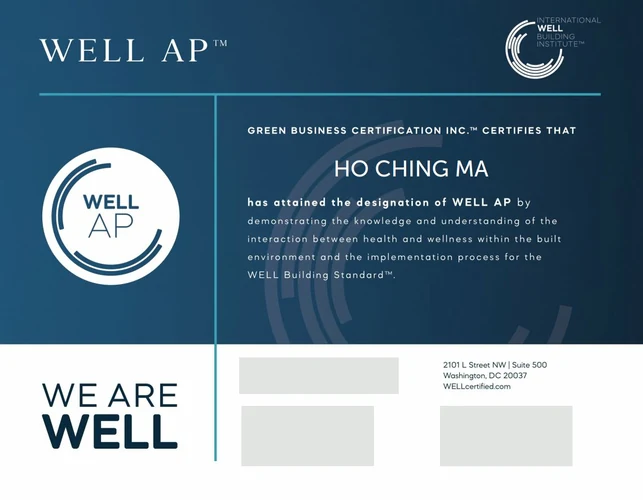
I’m thrilled to share that I’ve earned my WELL AP certification through the International WELL Building Institute. Thank you to archiroots for providing great study materials for this exam!

Architectural Designer · LEED AP BD+C
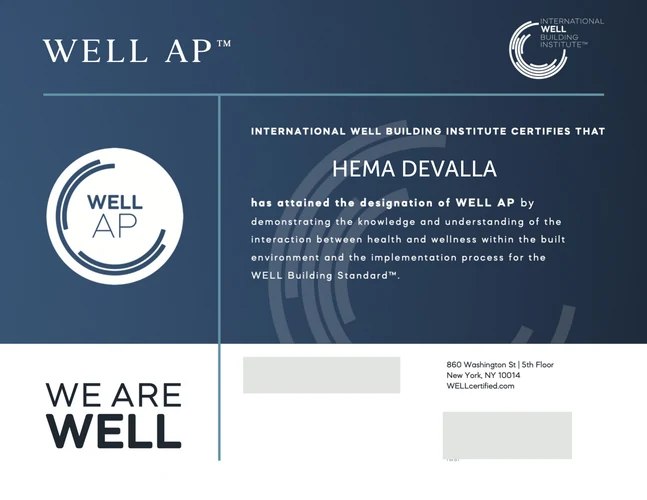
Excited to share that I earned my WELL AP credential! Big thanks to archiroots for the great study resources and support throughout the process.

Maria Georgia Saad
"His exam prep was organized, making complex topics straightforward and easy to understand. His ability to distill information into digestible parts made learning both effective and enjoyable."

Eyad Ismail
"His passion for sustainability and human health is evident in his commitment to helping others understand and apply green building practices. I wholeheartedly recommend Shadi as a trainer to anyone looking to expand their knowledge."

Bhawah Samyal
"Shadi's program and sample questions gave me access to actual exam scenarios. His way of teaching is excellent and straight forward with easy to visualize concepts. Thank you Shadi for helping me clear my exam."

Emile Mouawad
"Organized with clear, easy-to-grasp, and detailed explanations. Highly recommended for any engineer/architect aiming to know more about the rating."
Excellent

Rated 4.7 / 5 based on

Chad Higgins
Do this and pass!
Easy to follow and straight to the point resource.
Nadine Abdulsalam
Covered all topics for the exam. The practice tests were very helpful to evaluate performance.
Stephanie Kallas Mondalak
Simple, easy and straight to the point! The flashcards and practice tests will help a lot to prepare the exam.
B Williams
The exam prep is very direct and is easy to understand.
Hussien Nabawy
Very unique material and easy way explained.
WELL AP course from $167
★★★★★ Rated 4.7 out of 5 on Trustpilot
What This Course Prepares You For
WELL AP stands for WELL Accredited Professional, a credential from the International WELL Building Institute (IWBI) certifying that you can guide a project through WELL certification. Where LEED asks how a building performs environmentally, WELL asks what it does to the people inside it: the air they breathe, the water they drink, the light they work under, the food available to them, and the effect the space has on their mind and body.
A WELL AP knows the WELL Building Standard across its eleven concepts: “Air, Water, Nourishment, Light, Movement, Thermal Comfort, Sound, Materials, Mind, Community, and the certification and Portfolio process”. The professional can translate the concepts into design decisions, documentation, and performance verification. In practice that means advising the project team, managing submissions on the WELL platform, and coordinating the performance testing that certification depends on.
The credential is increasingly used as a market signal on both sides. Professionals hold it to access higher-paid roles and leadership on healthy-building projects; firms count their WELL APs to win work from clients who now expect occupant health to be designed in, not added on.
WHY GET YOUR WELL AP NOW
The WELL certification today occupies roughly the position LEED held 10 years ago: recognized, accelerating, and not yet saturated. That gap is the opportunity. When a credential is scarce and demand is climbing, the people who hold it early are the ones who get the projects and the leadership roles attached to them.
The market pressure behind it is real. Employers and clients are increasingly explicit about occupant health, air quality, daylight, acoustics, and mental wellbeing are now written into briefs rather than treated as extras. That creates demand for professionals who can actually deliver against the WELL Building Standard, not just talk about wellness. A WELL AP is the recognized proof that you can.
Based on Archiroots data from over 7,000 students, professionals report meaningful career gains after earning wellness and sustainability credentials. Individual results self-reported by students in interviews; outcomes vary by market, role, and experience. For architects, engineers, and designers already working in the built environment, the WELL AP is a small investment against a credential the market is still short of.
For salary data and real job ads, read whether the WELL AP is worth it.
Save on WELL AP Preparation
The WELL AP exam costs $299 USD, and that fee covers a single attempt.
The exam fee is the smaller half of the real cost. Preparation is where candidates overspend: books, guidebooks, webinars, and practice exams routinely add up to well over $800.
This WELL AP course exists to collapse that number and to remove any risk paying $299 twice.
The student price and renewal fees are in the WELL AP cost breakdown.
WELL AP EXAM FORMAT
| Knowledge Domain | Scored Questions |
|---|---|
| Air | 11 |
| Nourishment | 10 |
| Water | 9 |
| Light | 9 |
| Materials | 9 |
| Mind | 9 |
| Community | 9 |
| Sound | 8 |
| Movement | 7 |
| Thermal Comfort | 7 |
| WELL Certification & WELL Portfolio | 12 |
| Total scored | 100 |
| Unscored pilot questions | 15 |
| Total exam questions | 115 |
Scored on a scale of 125–200. A score of 170 or higher passes. Pilot questions are unmarked and placed randomly, so answer every question.

AIR
11 QUESTIONS
WATER
9 QUESTIONS

NOURISHMENT
10 QUESTIONS

LIGHT
9 QUESTIONS

MOVEMENT
7 QUESTIONS

THERMAL COMFORT
7 QUESTIONS
SOUND
8 QUESTIONS

MATERIALS
9 QUESTIONS

MIND
9 QUESTIONS

COMMUNITY
9 QUESTIONS
CERTIFICATION & PORTFOLIO
12 QUESTIONS
PILOT QUESTIONS
15 QUESTIONS
What's Inside the WELL AP Training Course
The foundation, what WELL is, how the exam works, and the structure of the standard.
- Overview of WELL
- WELL principles
- Precondition vs optimization
- Scorecard
- Performance features
- Project types
- Performance testing
- Multifamily projects
- Certification levels
- Project financials
- Space types
- Concepts
The full certification workflow, from registration through recertification.
- Registration
- Roles & responsibilities
- Documentation requirements
- Precertification
- Documentation review
- Performance verification
- Curative action plan
- Award
- Certify
- Appeals
- Recertification
Managing WELL across multiple buildings or a whole real-estate portfolio.
- Introduction
- Engagement
- WELL portfolio scope
- Roles
- Documentation requirements
- Performance verification
- Feature review
- WELL report
- Awards
- Maintenance of achievements
- Audits
- Appeals
- Recertification
Air quality and ventilation strategies for healthy indoor environments.
- Air quality
- Smoke-free environment
- Ventilation design
- Construction pollution management
- Enhanced air quality
- Operable windows
- Air quality monitoring
- Pollution infiltration management
- Combustion minimization
- Source separation
- Air filtration
- Enhanced supply air
- Microbe & mold control
Water quality, access, and management for occupant health.
- Water quality indicators
- Drinking water quality
- Basic water management
- Enhanced water quality
- Drinking water promotion
- Moisture management
- Hygiene support
- Onsite non-potable water reuse
Access to healthy food and supportive eating environments.
- Fruits and vegetables
- Nutritional transparency
- Refined ingredients
- Food advertising
- Artificial ingredients
- Portion sizes
- Nutrition education
- Mindful eating
- Special diets
- Food preparation
- Responsible food sourcing
- Food production
- Local food environment
- Red and processed meats
Daylight, electric lighting, and their effect on health and circadian rhythm.
- Light exposure
- Visual lighting design
- Circadian lighting design
- Electric light glare control
- Daylight design strategies
- Daylight simulation
- Visual balance
- Electric light quality
- Occupant lighting control
Designing spaces that encourage physical activity.
- Active buildings and communities
- Ergonomic workstation
- Circulation network
- Facilities for active occupants
- Site planning and selection
- Physical activity opportunities
- Active furnishings
- Physical activity spaces
- Physical activity promotion
- Self-monitoring
- Ergonomics programming
Temperature control and comfort across the building.
- Thermal performance
- Verified thermal comfort
- Thermal zoning
- Individual thermal control
- Radiant thermal comfort
- Thermal comfort monitoring
- Humidity control
- Enhanced operable window
- Outdoor thermal comfort
Acoustic comfort and noise management.
- Sound mapping
- Maximum noise levels
- Sound barriers
- Reverberation time
- Sound reducing surfaces
- Minimum background sound
- Impact noise management
- Enhanced audio devices
- Hearing health conservation
Reducing exposure to hazardous building materials.
- Material restrictions
- Interior hazardous materials
- CCA and lead management
- Site remediation
- Enhanced material restrictions
- VOC restrictions
- Materials transparency
- Materials optimization
- Waste management
- Pest management
- Cleaning products
- Contact reduction
Mental health, stress management, and cognitive wellbeing.
- Mental health promotion
- Nature and place
- Mental health services
- Mental health education
- Stress management
- Restorative opportunities
- Restorative spaces
- Restorative programming
- Enhanced access to nature
- Tobacco cessation
- Substance use services
Health equity, inclusion, and community support.
- Health promotion
- Integrative design
- Emergency preparedness
- Occupant survey
- Enhanced occupant survey
- Health services
- Enhanced health promotion
- New parent support
- New mother support
- Family support
- Civic engagement
- Diversity and inclusion
- Accessibility and universal design
- Emergency resources
- Emergency resilience
- Housing equity
- Responsible labor
- Support for victims of domestic violence
- Community immunity
- Emergency preparedness
- Enhanced acknowledgement
Bonus credits for innovative and exemplary WELL strategies.
- Innovate WELL
- WELL accredited professional
- Experience WELL certification
- Gateway to WELbeing
- Carbon disclosure and reduction
LEED vs WELL
LEED vs WELL, different issues a conventional building has. LEED measures environmental performance: energy use, water efficiency, material impact, carbon. WELL measures the building’s effect on the people inside it, air and water quality, light, thermal comfort, acoustics, nourishment, movement, and mental wellbeing. They’re complementary, not competing, and a growing number of projects pursue both.
Which credential you earn first depends on where your work sits. If your projects are driven by energy, carbon, and certification of new construction, the LEED track is the natural start: the LEED Green Associate course is the required foundation, LEED AP BD+C is the most in-demand specialty, LEED AP O+M covers existing buildings, and LEED AP ID+C covers interior fit-outs. If your work is about how a space affects the people using it, workplace design, interiors, wellness-driven clients then this WELL AP course will help you prove.
There’s also a supply argument. LEED credentials are common; WELL AP is still comparatively scarce. Holding both is the strongest position of all, and it’s why many of our students take the LEED Green Associate and WELL AP back-to-back. The study habits transfer, and the combination is what clients increasingly ask for by name.
WELL AP Course & Exam FAQ
Two: you must be at least 18 years old, and agree to comply with IWBI’s Disciplinary and Exam Appeals Policy. No degree, discipline, or work experience is required, though IWBI recommends prior exposure to health and wellbeing concepts in the built environment. The WELL AP certification guide covers eligibility, cost and renewal in full.
Register and pay through your WELL account on IWBI, which issues you an eligibility ID (EID). Use that EID to schedule with Prometric, at a test center or remotely via ProProctor. You have 12 months from purchase to sit the exam, and one six-month extension is available on request.
Around three months if you’re working through the reference guidebook. With this simplified course, 30 minutes a day for one week, then one practice exam a day plus flashcards in week two, most students are ready in two weeks. The WELL AP study guide explains the plan and the scores to expect.
Harder than the LEED Green Associate, because there’s no foundational tier, the full WELL Building Standard is tested in a single exam. The difficulty comes from the volume of the guidebook and the fact that questions test application and analysis, not just recall. With material that’s been distilled to what’s actually examinable, it becomes manageable. More detail on WELL AP difficulty is in the full guide.
Immediately. Your score appears on screen at the end of the exam, and a score report is emailed to you afterward. Results are processed and your WELL account updated within 72 hours.
It must be renewed every two years with 30 continuing education hours, 24 general and 6 WELL-specific. Miss the reporting deadline and the credential expires; reinstating it means registering and retaking the exam as a new candidate. See how to keep the WELL AP active for the renewal rules.
Yes, through Prometric’s ProProctor remote proctoring platform. You’ll need a laptop or desktop (no dual monitors), a movable webcam, and a private room with a door you can close. Breaks are not permitted during remote exams, and you must stay in the webcam’s field of view for the entire session.
WELL certification is awarded to buildings. A person earns the WELL AP credential by passing the WELL AP exam, which is what most people mean by the WELL certification exam.
No. There is one WELL AP exam, based on the WELL v2 standard.
Yes. LEED group training for companies gives a team of 2 or more per user pricing, one invoice or purchase order, and a live private cohort with the instructor if you want one. Each person can choose a different credential.